
Heat Cable not working?
A malfunctioning heat cable system can be frustrating and can be caused by many different things. Our professionals have the experience and tools needed to troubleshoot your heat cable system. Whether it's as simple as a bad breaker, or a as elusive as a bad splice somewhere down the line, our experts will find it and fix it.
What could cause a heat cable system to not work?
A number of things can cause your heat cable system to not work or function properly. If your system includes a thermostat, check to see if it is set at the right temperature. Different brands and types of heat cable have specific electrical requirements and guidelines for installation. Electrical issues can take more time to find, as there are several factors that contribute to a system to function. Starting in the electrical panel, the correct breaker must be installed. Going from the breaker out to the power location, the correct gauge of wire must be used in association with the correct breaker. On the circuit, there could be GFCI outlets in the home tripping the circuit. There could be an issue with the splice from the interior wiring to the heat cable. Splices can be done incorrectly, leading to poor performance. Splices and also be secured or sealed incorrectly, leading to water entering the splice and causing a short. If your system includes a control box, there could be bad components or wiring in the box.
The heat cable itself could also have its own issues. Heat cable could come from the factory with a defect, causing a megaohm reading to be low, which effects efficiency due to a ground braid being exposed to another conductor. There could be a cut in the cable allowing water to get in, which may not initially stop the system from working, but over time the metals in the cable will rust. Typically, water in the system can be detected with a megaohm reading jumping around. Heat cable with cuts can be dangerous and cause things like gutters to electrify (ask us how we know). Cuts in a heat cable system typically come from a rough installer jamming the cable through a sharp downspout. We've also seen animals chew through cable. Sometimes screws are driven into the cable during other construction, or a screwed-on clip install.
These are just some of the many reasons your system may not be working properly. Contact us today to schedule a troubleshoot appointment.
The heat cable itself could also have its own issues. Heat cable could come from the factory with a defect, causing a megaohm reading to be low, which effects efficiency due to a ground braid being exposed to another conductor. There could be a cut in the cable allowing water to get in, which may not initially stop the system from working, but over time the metals in the cable will rust. Typically, water in the system can be detected with a megaohm reading jumping around. Heat cable with cuts can be dangerous and cause things like gutters to electrify (ask us how we know). Cuts in a heat cable system typically come from a rough installer jamming the cable through a sharp downspout. We've also seen animals chew through cable. Sometimes screws are driven into the cable during other construction, or a screwed-on clip install.
These are just some of the many reasons your system may not be working properly. Contact us today to schedule a troubleshoot appointment.
|
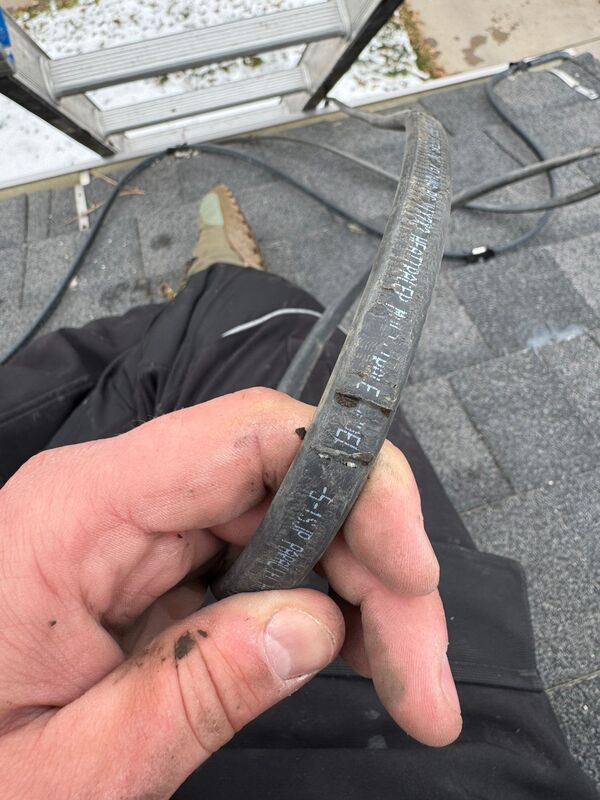
This cable was in a downspout and was found during a troubleshoot with cuts going all the way down the downspout. The cuts were caused during the initial installation when the cable was jammed down the downspout too roughly. The system only stopped working about one year after the initial install date after water slowly worked its way to the power location at the bottom of the downspout.
|
|
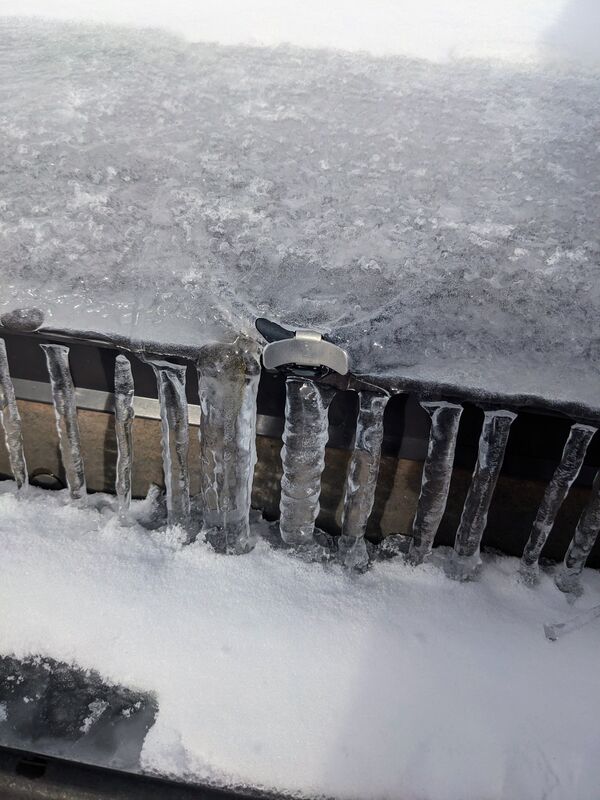
The cable in this image is encased in a few inches of ice. The gutter below it is completely filled with ice and sagging away from the facia board. The culprit of this troubleshoot was a bad GFEP pigtail in an eave outlet. The GFEP pigtail was positioned under the eave in such a way that water could get inside. When we opened the pigtail, it was completely rusted. This is why it's important to include a drip loop for water to run off and away from any connections/splices/control boxes.
|